



What Happens When You Drive With the Parking Brake On?

Updated January 2019
Have you ever forgotten to release the parking brake before driving? It can be pretty embarrassing, but vanity isn’t the only issue here; absentmindedness like this could cause damage your vehicle’s brakes, or worse.
The parking brake helps your vehicle stay where you leave it. Even if you drive a car with an automatic gearbox, it’s wise to set the brakes. Aside from holding the car in place, the parking brake can also help prevent transmission damage, especially while parking on steep hills, something that can put tremendous strain on internal components.
If your ride has a manual transmission, it’s especially important to activate the parking brake before exiting. Putting it in gear may not be enough to prevent a roll away. If the shifter doesn’t fully engage, it could inadvertently pop out of gear, allowing the vehicle to move on its own, which has obvious and undesirable implications. Therefore it’s best to both put the vehicle into gear and put the parking brake on when you park it. Be sure not to leave your parking brake on when storing a car, though, as this can seize the system and cause your headaches when you go to drive it again in the summer.
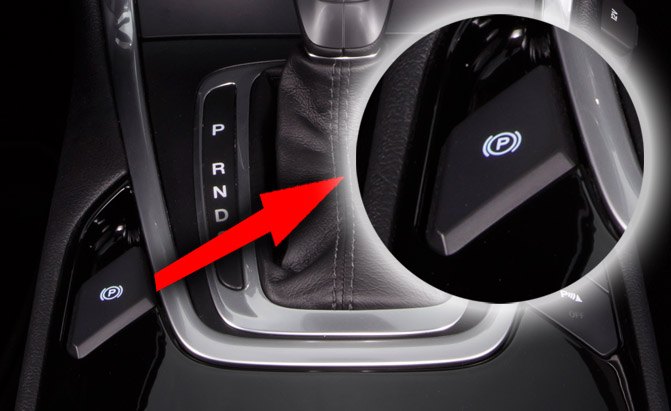
Modern parking brakes can be operated by a lever, foot pedal or even electronic switch. But what happens if you drive with the parking brake on? Well, the short answer is that it depends.
SEE ALSO: Tips for Buying a Car on Craigslist
If the hand brake is only applied one or two clicks, the risk of damage is rather minimal. But this is why you should always be sure to put your parking brake FULLY ON. That you will know you forget to let the parking brake out, as the car will resist moving much more than it would if it was only applied half way, for example. Making this a habit will ensure that you never have to deal with aftermath of leaving your parking brake on.
For starters, in a front-drive vehicle, the rear wheels may not even turn, in which case nothing would happen aside from the tires dragging along the pavement like an unwilling cat on a leash. Fortunately, if this happens, it should be a pretty obvious that something is amiss; obnoxious howling and vibratory judders ought to rouse the suspicions of even the most inattentive motorist. However, if your vehicle is of the rear-wheel-drive persuasion, the engine might be able to overpower the brakes and cause real damage.

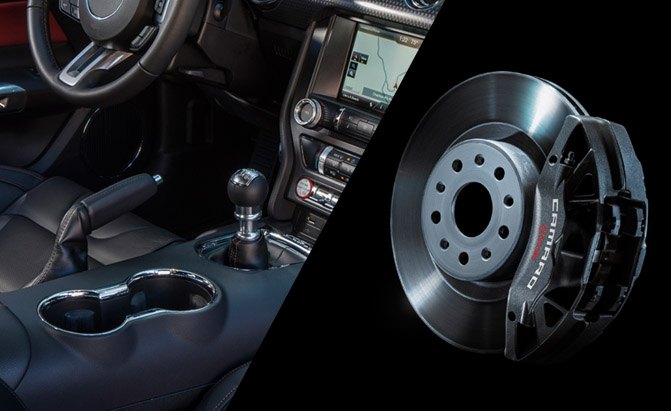
Should you forget to release a fully applied parking brake before taking off, the friction of the pads or shoes dragging against the rotors or drums will generate tremendous amounts of heat. If allowed to go unchecked for an extended period of time, this could prematurely wear all of these components, but it might lead to wheel-bearing damage or the catastrophic failure of other parts as well, and this doesn’t even take into account the additional strain it puts on the engine.
SEE ALSO: Top 7 Best Performance Brake Rotors and Why Some Cars Need Them
The big concern with this situation is how long and how fast you drive with the brake on. A trip around the block with the brake only applied a few clicks probably isn’t going to cause any measurable damage, as modern deceleration systems are designed to absorb a tremendous amount of heat. But if you drive at 75 miles an hour on the freeway for 150 miles with the brake fully applied, it’s a safe bet your vehicle’s rear binders will be toast, and probably a few ancillary components as well. Have you ever replaced a caliper, shock absorber or axle seal before?

Fortunately, none of this should really be an issue with new cars and trucks, as practically every vehicle has an indicator light to warn the driver about the parking brake should it be left on. Taking things one step further, the latest crop of electric parking brakes that are operated with a button or switch often disengage on their own when a vehicle is put in drive or starts moving, something that prevents any damage from happening in the first place.
Here is a little anecdote from AutoGuide.com‘s news editor, Steve Elmer, about how he learned what can go wrong when you drive with the parking brake on:
“I learned first hand the consequences of driving with the parking brake on before I even obtained a driver’s license. I was about 12 or 13, and I loved riding my parent’s ATV. With my brother on a dirt bike, we set out as we normally would on a ride around my cottage, but something wasn’t quite right. The machine felt restricted, like something was holding it back, but my young brain couldn’t put the pieces together. I continued to ride the ATV for about 5 to 10 minutes, deciding to ignore the constant pull that was slowing me down.
As we drove back into the cottage and began descending down our long driveway, my brother starting yelling “fire, fire!” At first, I scanned the cottage for something burning. It wasn’t until I looked back to see him pointing at the rear left ATV tire that I finally got it. I shut the machine off and jumped off of it, in time to see a few flames licking up the back.
Leaving the brake to drag for such a long period of time had heated up the disks and surrounding area so much that the brake line melted, allowing brake fluid to spew out onto a red hot rotor. Once the engine shut off, fluid stopped circulating, so the fire was short lived and damage was minimal.
Needless to say, I am very conscious of the position of the parking brake before I start rolling.”
In short, it’s wise to use your vehicle’s parking brake as often as possible, but pay attention when going for a spin to make sure it’s fully released.
SEE ALSO: Top 10 Best Car Covers
Additionally, many newer cars, such as those from the 2018 and 2019 model year, are equipped with electronic parking brakes. Most of these parking brakes are fool-proof and will automatically disengage when you put the vehicle into drive or press the accelerator. These are becoming more commonplace due to their use simplicity for drivers, but many manual transmission cars still have traditional handbrakes.
Check out our Tips and Advice Section