



Self-Driving Cars Might Make Motion Sickness More Common

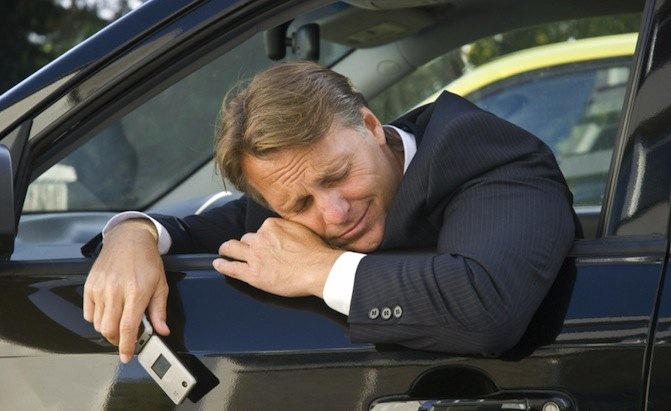
Self-driving cars will make our roads safer, but they will also bring an unforeseen consequence.
A new study, released by the University of Michigan Transportation Research Institute (UMTRI), claims that six to 12 percent of American adults are expected to be moderately to severely motion sick at some time while riding in a self-driving car.
“Motion sickness is expected to be more of an issue in self-driving vehicles than in conventional vehicles,” said UMTRI researchers Michael Sivak and Brandon Schoettle. “By switching from driver to passenger, by definition, one gives up control over the direction of motion, and there are no remedies for this.”
The reduced ability to anticipate the direction of movement is pegged as the main factor that will make riders sick. Based on responses to a survey, 37 percent of U.S. adults would regularly engage in activities, like reading or watching videos, that increase the likelihood of car sickness while in a self-driving car.
The report recommends sleeping or closing one’s eyes to help avoid being car sick, while it also says that self-driving car may be programmed to deliver a smoother ride than conventional vehicles, a factor that may reduce car sickness.